The lamp cost six dollars. It was sitting on a low shelf at the back of a thrift store in town, a squat ceramic base glazed in a deep, uneven green, with a yellowed shade that looked like it had lived through a lot of cigarettes. I carried it to the register mostly out of pity. It now sits on the side table by our reading chair, and it's the reason that corner of the living room went from "the place we pile mail" to the place everybody wants to be after supper.
I didn't understand how much lighting mattered until we moved into this house. Our old apartment in Columbia had a ceiling light in every room and one floor lamp that came with us from my college days. When we bought the 1958 ranch, the living room had a ceiling fan with a light kit and nothing else. At night, it looked like a waiting room. Clean, bright, and nobody wanted to sit in it.
Overhead light versus pools of light
A single overhead fixture lights a room evenly, from above, with nothing to rest your eye on. It's useful when you're looking for a dropped earring. It's not very good for living in.
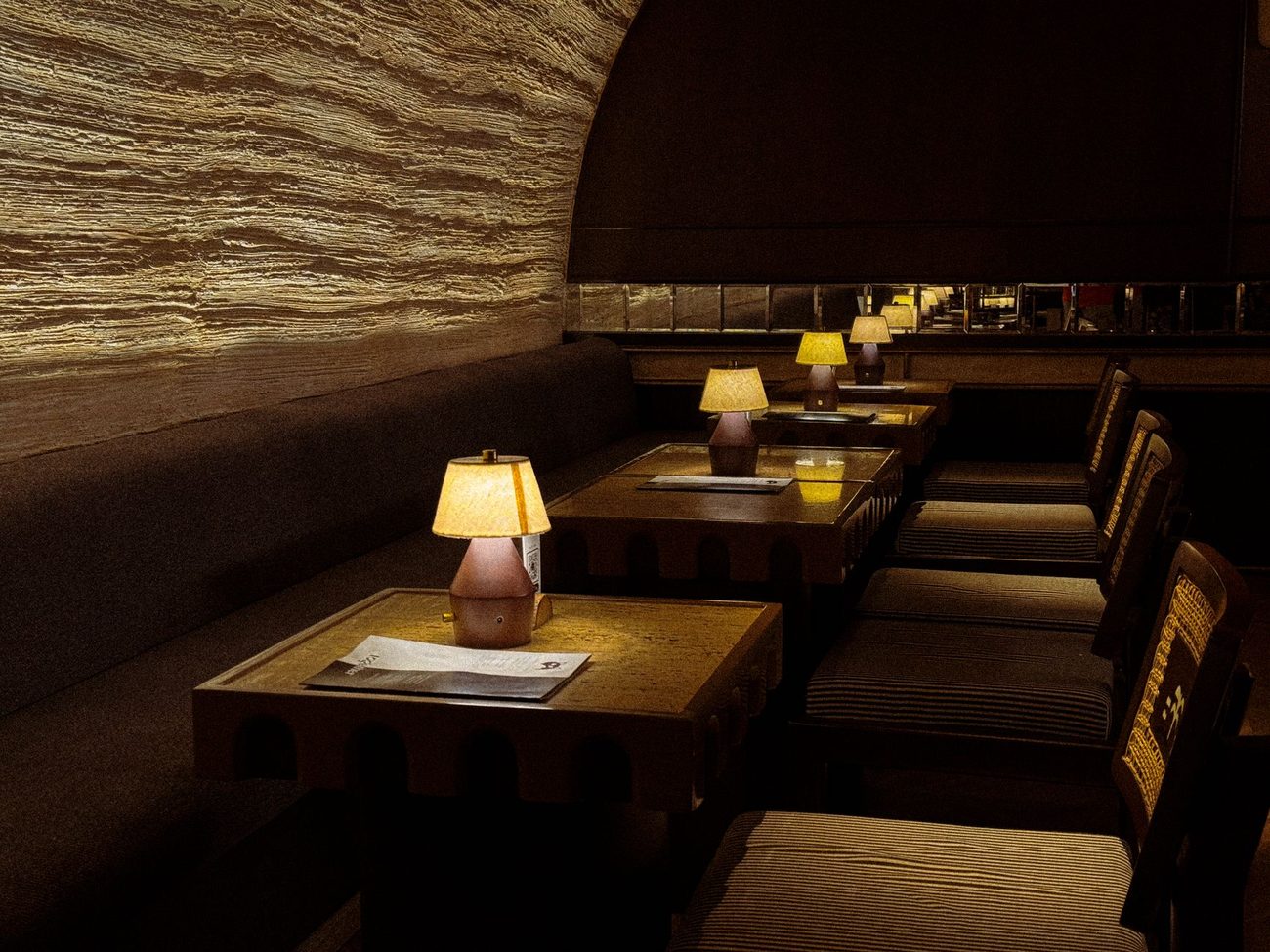
Several lamps at different heights do the opposite. They make little pools of warmth where people actually sit, and they leave the corners a bit softer. The room feels smaller in the good way, more like a den than a hall. Over the past few years I've ended up with a loose rule for each room we use in the evening:
- At least three light sources, none of them overhead.
- Something low, like a table lamp at seated height.
- Something higher, like a floor lamp or a lamp on a bookshelf.
- Something small: a little accent lamp, a string of lights, even a candle on the mantel.
Our living room now has four lamps, and all four came from thrift stores or the church rummage sale. Together they cost less than forty dollars.
What I look for at the thrift store
After a lot of trial and error, these are the things I check before a lamp comes home with me:
- A heavy base. Ceramic, brass, wood, stone. Heavy lamps don't tip when a beagle's tail hits them, and they usually have better bones.
- The cord. I look along the full length for cracks, fraying or brittle spots near the plug. A bad cord isn't a dealbreaker on a six-dollar lamp, since rewiring kits are cheap and Ben has done several, but I factor it in. If you aren't comfortable rewiring, leave it.
- Ask to plug it in. Most stores have an outlet near the register. If the switch is dead, that's usually a cheap fix too, but it's good to know.
- Ignore the shade. Thrifted shades are almost always stained, crooked or the wrong size. I budget about $12 to $20 for a new plain linen or paper drum shade, and that one change makes an old lamp look intentional.
- Shape over color. A great shape in an ugly finish can be painted or simply accepted. My green lamp turned out to be the ugly finish I love most.
Bulbs are half the story
The first time I put a new shade on the green lamp, I screwed in whatever LED bulb was in the drawer, and the corner lit up like a dentist's office. That's when I learned to read the box. LED bulbs list a color temperature in "K." The lower the number, the warmer the light.
| Color temperature | How it feels | Where I use it |
|---|---|---|
| 2200K–2700K | Warm, golden, like old incandescents | Living room, bedrooms, porch |
| 3000K | Soft white, a touch cleaner | Kitchen, bathroom vanity |
| 4000K and up | Cool, bright, daylight-ish | Shed workbench, the laundry corner |
Every lamp in our living room now has a 2700K bulb, and the two by the sofa are on the lowest wattage equivalent I could find. LEDs use so little power that running three lamps through an evening costs less than running the overhead fan light used to, and it looks a hundred times better.
The evening switch
Around sunset, which in early May is close to eight o'clock here, I go around the house and turn on the lamps, then turn the overhead lights off. It takes about a minute. Lila has started calling it "making it nighttime," and she likes to do the hallway lamp herself.
Something shifts when the lamps come on. Voices drop a little. Ben stops checking his phone and picks up whatever library book he's slowly working through. Lila spreads out on the rug with her drawings. Pepper finds the pool of light nearest the sofa and settles into it like it was put there for her.
I've spent real money on things for this house that made far less difference. The green lamp cost six dollars plus a fourteen-dollar shade, and it gave us back our evenings in that room. I still go looking on the back shelves every time I'm near a thrift store. There's almost always another orphan waiting there.